
Ticket for STEW 2026 are LIVE!
Featured topics
Confirmed Speakers
Meet the Speakers
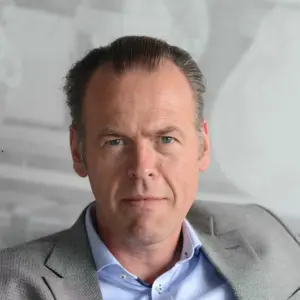
Jan Bosch, Professor of Software Engineering
We are proud to announce Jan Bosch as the opening keynote speaker for STEW 2026.
As one of Europe’s leading voices in software engineering, AI-driven innovation and digital transformation, Jan Bosch will share insights into the trends, technologies and strategies that are shaping the next generation of software-intensive businesses.

Tibo Bruneel, Head of AI and an industrial PhD student at Softwerk AB
Tibo Bruneel is Head of AI and an industrial PhD student at Softwerk AB in Växjö, Sweden, where his doctoral research is part of the DIA graduate school at Linnaeus University. His research specializes in LLM-based automatic code translation and MLOps, bridging academic research with industrial application. At Softwerk, he leads the company’s AI division, building applied AI and large language model solutions for enterprise clients across both the public and private sectors.

Masoud Sadrnezhaad, PhD student in the Department of Computer and Information Science at Linköping University
Masoud Sadrnezhaad is a PhD student in the Department of Computer and Information Science at Linköping University, Sweden, affiliated with the Vinnova competence center on Continuous Digitalization (CoDiG). His research combines generative AI, model-driven engineering, and software repository mining to automate the diagnosis and repair of cyber-physical system models, with a specific focus on the Modelica language. Prior to his PhD, he designed a deep learning-based recommender system for software architects during his master’s studies and worked as a team lead, web developer, and Linux server administrator.
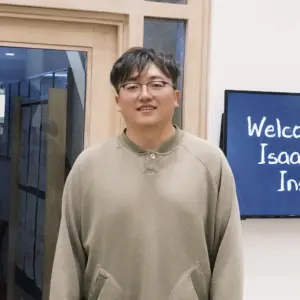
Xin Sun, PhD student in Software Engineering at Linköping University
Xin Sun is a PhD student in Software Engineering at Linköping University, Sweden. His research focuses on quality assurance for AI-assisted software development, particularly the evaluation and improvement of the non-functional quality of LLM-generated code. His current work explores repository-level coding agents and continuous autonomous refactoring, with the goal of making AI-generated software more trustworthy, maintainable, secure, and efficient. He holds a master’s degree from KTH Royal Institute of Technology.

Christoph W. Kessler, professor for Computer Science at Linköping University
Christoph W. Kessler is a professor for Computer Science at Linköping University, Sweden, where he leads the Programming Environment Laboratory’s research group on compiler technology and parallel computing. Since 2015 he also serves as the head of the division for Software and Systems (SaS) at the department of Computer and Information Science (IDA). His research interests include parallel programming, compiler technology, code generation, optimization algorithms, and software composition/synthesis.
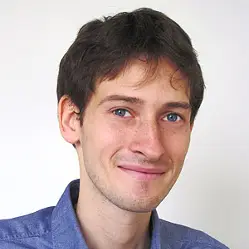
Marco Chiesa, Associate Professor at KTH Royal Institute of Technology in Stockholm
Marco Chiesa is an Associate Professor at KTH Royal Institute of Technology in Stockholm, where he leads the MINDS Lab. His research spans computer networks, systems, and AI-driven software, with a recent focus on combining large language models and formal verification to build more reliable and analyzable systems. He is a recipient of the IEEE Communications Society William R. Bennett Prize, the IETF Applied Networking Research Prize, and several best-paper awards, including at ACM CoNEXT and IEEE ICNP. He also collaborates extensively with industry through funded research projects, including partnerships with Saab, Ericsson, Red Hat, and NVIDIA.
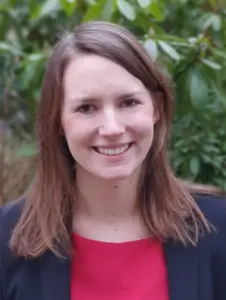
Rebekka Wohlrab, Associate Professor (Docent) in Computer Science at Chalmers University of Technology and adjunct faculty at Carnegie Mellon University, USA
Rebekka Wohlrab is an Associate Professor (Docent) in Computer Science at Chalmers University of Technology and adjunct faculty at Carnegie Mellon University, USA. She holds a PhD from Chalmers University of Technology. Her research interests are self-adaptive systems, requirements engineering, and software architecture. Rebekka Wohlrab is a Wallenberg AI, Autonomous Systems and Software Program (WASP) Fellow and recipient of the Future Research Leaders 2025 grant by the Swedish Foundation for Strategic Research (SSF).

Henrik Lönn, Volvo Technology
Henrik Lönn has a PhD in Computer Engineering from Chalmers and work as Technology and Strategy leader for Simulation Platform at Volvo Technology.
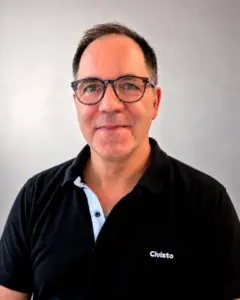
Johan Lidö, Civisto AB
Johan Lidö is the founder and CEO of Civisto AB, which builds AI decision support for invasive species management. His work focuses on human-in-the-loop prioritisation, traceable recommendations and decisions that remain understandable as evidence changes. Through Lidodevelopment AB, he also advises companies on AI transformation and strategy.
